

How to Choose the Right Coffee Table Size for Your Living Room
Choosing the right coffee table size can completely change how your living room feels.
A coffee table that is too large can make the room feel crowded. A table that is too small can look disconnected from the sofa. A table that is too high or too low can feel uncomfortable in daily use.
The best coffee table is not only about style. It should fit the room, support the way you live, and create a comfortable balance between the sofa, seating area, rug, and walking space.
Whether you prefer a round coffee table, rectangular coffee table, nesting table, or solid wood coffee table, the right size makes the living room easier to use and more visually complete.
Start with Your Sofa Size
Your sofa is the best starting point when choosing a coffee table.
A common rule is to choose a coffee table that is about two-thirds the length of your sofa. This creates balance without making the table feel too small or too dominant.
For example, if your sofa is around 84" long, a coffee table around 48" to 56" long can often work well. If your sofa is smaller, a compact round or rectangular coffee table may be a better choice.
The coffee table should feel connected to the sofa, but it should not overpower the seating area.

Choose the Right Coffee Table Height
Coffee table height is one of the most important details for comfort.
In most living rooms, the coffee table should be about the same height as the sofa seat or slightly lower. A table that is 1" to 2" lower than the sofa seat usually feels comfortable and natural.
Most coffee tables are between 14" and 18" high. Lower tables can create a relaxed modern look, while slightly taller coffee tables may work better with higher sofas or deeper seating.
If the table is too high, it may feel visually heavy. If it is too low, it may be uncomfortable for drinks, books, trays, or everyday use.
Leave Enough Space Around the Table
A coffee table should make the room more useful, not harder to move through.
The ideal distance between the sofa and coffee table is usually around 16" to 18". This gives enough space to walk comfortably while keeping the table close enough to reach.
If the table is too close, the room may feel tight. If it is too far away, it may become inconvenient to use.
Also think about the space around chairs, side tables, media units, and walkways. In a busy living room, movement matters as much as appearance.
Consider the Shape of the Room
The shape of your living room can help determine the best coffee table shape and size.
A rectangular room often works well with a rectangular or oval coffee table because the table follows the natural direction of the seating area.
A square or compact living room may work better with a round or square coffee table.
An open-plan living room may benefit from a larger coffee table or a nesting coffee table set that can be moved and adjusted depending on use.
The goal is to choose a shape that supports the room’s layout instead of fighting against it.
Round Coffee Tables for Softer Movement
Round coffee tables are a good choice for rooms where movement is important.
Because they do not have sharp corners, they can make the space feel softer and easier to walk around. This is especially useful in smaller living rooms, family spaces, or seating areas with multiple chairs.
A round coffee table also works well when you want the living room to feel more relaxed and conversational.
Common round coffee table sizes range from 28" to 48" in diameter, depending on the sofa size and room layout.
Smaller round tables work well in apartments and compact seating areas. Larger round tables can create a strong centerpiece in bigger living rooms.
Rectangular Coffee Tables for Practical Surface Space
Rectangular coffee tables are one of the most practical choices for many living rooms.
They provide generous surface space for books, trays, drinks, flowers, candles, and everyday objects. They also work especially well with standard sofas and longer seating arrangements.
A rectangular coffee table usually looks best when it follows the length of the sofa without being longer than the seating area.
If your sofa is long or your living room has a clear horizontal layout, a rectangular coffee table can create structure and balance.
Nesting Coffee Tables for Flexible Living
Nesting coffee tables are useful when you want flexibility.
They can be styled together as a layered centerpiece or separated when you need extra surface space. This makes them a smart option for open-plan rooms, apartments, and living rooms used for different activities.
A nesting table set can also make the space feel more dynamic than one fixed table.
If you often host guests, move furniture around, or use the living room in different ways, nesting coffee tables can be a practical choice.

Think About Your Rug Size
The rug and coffee table should work together.
If the rug is large, the coffee table should feel centered and proportionate within the seating area. If the rug is small, a large coffee table may make it look even smaller.
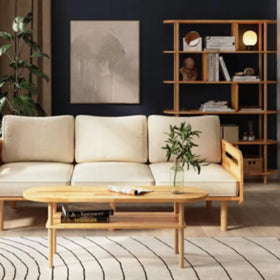
Ideally, the coffee table should sit comfortably on the rug with enough visual space around it. In many living rooms, the front legs of the sofa and chairs sit on the rug, while the coffee table becomes the center of the arrangement.
A well-sized coffee table helps the rug, sofa, and seating area feel connected.
Match the Coffee Table to Daily Use
Before choosing a coffee table size, think about how you actually use your living room.
Do you use the table for drinks and snacks?
Do you need space for books and decor?
Do you have children or pets?
Do you prefer a clean surface or extra storage?
Do you often host guests?
Do you need a lower shelf or nesting design?
A small decorative table may look beautiful, but it may not be practical if you use the living room every day. A larger coffee table may be useful, but only if the room has enough space around it.
The right size depends on real use, not only style.
Choose the Right Material
Size is important, but material also affects how the coffee table feels in the room.
Solid wood coffee tables are a strong choice for living rooms because they bring warmth, natural texture, and long-term durability. Walnut creates a rich and refined look. Oak feels timeless and strong. Pine gives a relaxed rustic character. Beech creates a clean and natural modern feeling.
A solid wood coffee table can work with many interior styles, from modern and mid-century to farmhouse, Japandi, rustic, and warm contemporary spaces.
The material should fit both your lifestyle and the mood you want to create.

Small Living Room Coffee Table Tips
For a small living room, choose a coffee table that feels visually light and easy to move around.
Round coffee tables, compact rectangular tables, nesting tables, and tables with slim legs can work well in smaller rooms.
Avoid coffee tables that are too deep or too bulky. Even if they fit technically, they may make the room feel crowded.
In small spaces, every inch matters. A coffee table should support daily life while keeping the room open and comfortable.
Large Living Room Coffee Table Tips
In a large living room, a small coffee table can look lost.
Larger seating areas may need a bigger coffee table, a wide rectangular table, a large round table, or a set of nesting tables. The table should visually connect the sofa, chairs, rug, and surrounding furniture.
If the room feels too open, the right coffee table can help create a stronger center.
A large solid wood coffee table can also bring warmth and visual weight to an open living space.
Quick Coffee Table Size Guide
For most living rooms:
Coffee table length: About two-thirds the length of the sofa
Coffee table height: Same height as sofa seat or 1" to 2" lower
Distance from sofa: Around 16" to 18"
Walking space around table: Keep enough room for comfortable movement
Round table diameter: Usually 28" to 48", depending on room size
Standard coffee table height: Usually 14" to 18"
These are helpful starting points, but the final choice should always depend on your sofa, room layout, and daily use.

Common Mistakes to Avoid
Choosing a coffee table only because it looks good in photos
Ignoring the sofa height
Forgetting walking space
Buying a table that is too small for a large sofa
Choosing a table that is too bulky for a small room
Not checking the exact dimensions
Ignoring storage needs
Choosing a material that does not fit daily use
Forgetting the rug and seating layout
Choosing style before function
A beautiful coffee table should also be comfortable, useful, and proportionate.
FAQ
What is the best height for a coffee table?
A coffee table should usually be about the same height as your sofa seat or 1" to 2" lower. Most coffee tables are between 14" and 18" high.
How long should a coffee table be compared to a sofa?
A good rule is to choose a coffee table that is about two-thirds the length of your sofa. This helps the seating area feel balanced.
How far should a coffee table be from the sofa?
The ideal distance is usually around 16" to 18". This keeps the table easy to reach while leaving enough space to move.
Is a round or rectangular coffee table better?
Round coffee tables are great for softer movement and smaller spaces. Rectangular coffee tables offer more surface area and work well with longer sofas.
What coffee table is best for a small living room?
A round, compact rectangular, or nesting coffee table usually works well in small living rooms. Choose a size that keeps the room open and easy to move through.
Should a coffee table sit on a rug?
Yes, in most living rooms, the coffee table sits centered on the rug. The table, rug, sofa, and chairs should feel visually connected.
Is solid wood good for a coffee table?
Yes, solid wood is a strong and long-lasting choice for coffee tables. It adds warmth, natural texture, and durability to everyday living spaces.
Final Thoughts
Choosing the right coffee table size is about more than finding a style you like.
The table should fit your sofa, support your daily routine, leave enough space for movement, and create balance in the room. Height, length, shape, material, and placement all affect how comfortable the living room feels.
A well-sized coffee table can make the room feel more complete, more practical, and more natural to live in.
Whether you choose a round coffee table, rectangular coffee table, nesting table, or solid wood design, the best choice is the one that fits both your space and the way you use it every day.
Tomruque creates handcrafted solid wood coffee tables designed for real homes, custom dimensions, and long-term everyday use.
Stay in touch:
Instagram: @tomruque
Pinterest: Tomruque
Facebook: Tomruque
YouTube: Tomruque Wood Studios
Email: info@tomruque.com
New Collection


from Original price $953.00
from Original price $953.00
Original price
$953.00
from $794.00
from $794.00
Current price
$794.00
Soren Round Solid Walnut Wood Coffee Table | Sculptural Scandinavian Modern Design
In stock
A Sculptural Walnut Coffee Table with Soft Architectural Curves The Soren Round Solid Walnut Coffee Table combines the richness of natural walnut w...
View full details

from Original price $1,262.00
from Original price $1,262.00
Original price
$1,262.00
from $1,153.00
from $1,153.00
Current price
$1,153.00
Soren Oval Walnut Coffee Table | Sculptural Scandinavian Modern Design
In stock
A Sculptural Walnut Coffee Table with Soft Oval Proportions The Soren Oval Solid Walnut Coffee Table combines the rich natural character of...
View full details

from Original price $921.00
from Original price $921.00
Original price
$921.00
from $736.00
from $736.00
Current price
$736.00
Liva Square Walnut Coffee Table | Scandinavian Modern Design
In stock
Soft Scandinavian Simplicity in a Warm Solid Walnut Form The Liva Square Solid Walnut Coffee Table brings together the warmth of natural walnut a...
View full details

from Original price $1,081.00
from Original price $1,081.00
Original price
$1,081.00
from $1,009.00
from $1,009.00
Current price
$1,009.00
Arden Solid Walnut Oval Coffee Table | Sculptural Arched Base Design
In stock
A Sculptural Walnut Coffee Table with Soft Organic Curves The Arden Solid Walnut Oval Coffee Table brings together rich natural walnut grai...
View full details

from Original price $2,237.00
from Original price $2,237.00
Original price
$2,237.00
from $1,790.00
from $1,790.00
Current price
$1,790.00
Avero Round Walnut Dining Table | Sculptural Pedestal Design
In stock
A Sculptural Walnut Dining Table with a Distinctive Central Pedestal The Avero Round Solid Walnut Dining Table combines the rich natural character ...
View full details