
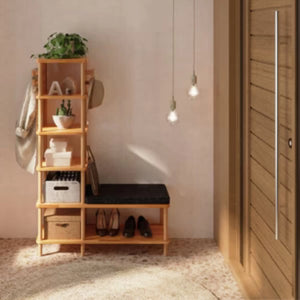

How to Choose the Right Solid Wood Bookcase for Your Home
A bookcase may look perfect in product photos and still feel completely different once it is placed in your room. It might be too deep for the available space, too small for the wall, or unable to support the books you planned to store.
The best choice is usually the one that fits the room, holds the right combination of books and decorative objects, and supports the way the space is used every day.
That means looking beyond appearance and comparing dimensions, materials, shelf construction, storage options, and long-term durability before making a decision.
This guide explains how to choose the right bookcase in a practical order, helping you narrow your options with greater confidence.
Start by Measuring the Available Space
Before comparing materials or styles, decide exactly where the bookcase will be placed.
Measure the available width, height, and depth rather than looking only at the open wall. Nearby doors, windows, baseboards, electrical outlets, radiators, vents, and walking paths can all affect whether the furniture fits comfortably.
A bookcase may technically fit the wall but still make the room feel crowded if it extends too far into the space.
Check:
- Available wall width
- Ceiling height
- Maximum furniture depth
- Clearance around doors and windows
- Nearby electrical outlets
- Space required for comfortable movement
- Access through doors, hallways, elevators, and staircases
Marking the dimensions on the wall and floor with painter’s tape can make the scale much easier to understand before ordering.

Think About What You Plan to Store
The right bookcase depends heavily on what will be placed on it.
A unit intended mainly for decorative objects does not require the same shelf support as one that will be filled with hardcover books. Office files, vinyl records, storage baskets, children’s toys, plants, and ceramics also have different space and weight requirements.
Before shopping, consider whether you need storage for:
- A large book collection
- Art books or oversized volumes
- Office files and binders
- Decorative objects
- Plants and ceramics
- Children’s books and toys
- Storage baskets
- Electronics or cables
- A mixture of display and concealed storage
This step helps determine the ideal shelf depth, spacing, strength, and overall size.
Choose the Right Size and Shape
The shape of a bookcase affects both its storage capacity and how visually heavy it feels in the room.
Tall and Narrow Bookcases
Tall bookcases and narrow bookcases designs use vertical space efficiently and are useful when floor space is limited.
They work well in:
- Compact living rooms
- Bedrooms
- Home offices
- Hallways
- Small reading corners
They provide storage without occupying a wide section of the wall. However, tall furniture should be secured properly to prevent tipping.

Wide Bookcases
Wide designs offer more display and storage space and can create a strong focal point in a living room, office, or family room.
A low, wide bookcase may also provide a useful top surface for lamps, artwork, speakers, or framed photographs.
Wide shelves should have enough vertical support to prevent bending under heavy loads.
Corner Bookcases
Corner bookcases make use of areas that might otherwise remain empty.
They are especially helpful in small rooms where a standard rectangular unit would interfere with doors, windows, or walking paths.
A corner design can provide practical storage while making the room feel more complete.
Ladder Bookcases
Ladder-style bookcases usually have a lighter visual appearance and a relatively small footprint.
They are suitable for decorative displays, plants, small book collections, and compact interiors. Because their shelves may become narrower toward the top, they are not always the best choice for large or heavy collections.
Room Divider Bookcases
Open bookcases can divide a room without completely blocking light or visibility.
They work particularly well in:
- Studio apartments
- Open-plan living and dining areas
- Shared workspaces
- Large bedrooms
- Home offices
A room divider bookcase should look finished from both sides and have a stable base. Open shelves generally maintain a stronger visual connection between the two areas.
Compare Bookcase Materials
Material affects appearance, weight, durability, maintenance, repairability, and price.
Solid Wood
Solid wood is a strong choice for furniture expected to remain in use for many years.
It provides natural grain, texture, and tonal variation that cannot be fully reproduced by printed finishes. It can also often be sanded, refinished, repaired, or refreshed if the surface becomes worn.
Different wood species create different visual and practical qualities.
Solid Oak
Oak wood is dense, durable, and suitable for shelves that need to support significant weight. Its visible grain creates a substantial and timeless appearance.
It works well in traditional, contemporary, rustic, and modern interiors.
Solid Walnut
Walnut wood is known for its rich color, expressive grain, and refined appearance.
It is often used in mid-century modern, contemporary, Japandi, and warm minimalist interiors. A solid walnut bookcase can feel elegant without appearing overly formal.
Solid Beech
Beech wood is hard, smooth, and dependable. Its relatively even grain suits clean and simple furniture designs.
It works naturally in Scandinavian, minimalist, modern, and family-friendly interiors.
Solid Pine
Pine wood is lighter in color and usually more affordable than walnut or oak. Knots and natural markings give it a relaxed and warm character.
Solid pine bookcases work especially well in farmhouse, rustic, cottage, industrial, and casual contemporary spaces.
Pine can support books successfully when the shelves have suitable thickness, width, and reinforcement.
Quality Plywood
Quality plywood can provide a balance between stability, durability, and cost.
It is generally stronger and more moisture-resistant than low-cost particleboard, although it does not have the same material character or long-term repairability as solid wood.
MDF and Particleboard
MDF and particleboard are common in affordable furniture.
They can be suitable for lighter storage and temporary use, but they are usually more vulnerable to moisture, edge damage, swelling, and sagging under heavy loads.
These materials may work for decorative items or small collections, but shelf weight limits should be checked carefully.
Metal
Metal frames can provide strength and create a lighter, more open structure when paired with wood shelves.
They are commonly used in industrial and modern designs. Metal-framed bookcases can support substantial weight, but the quality of the shelves and connection points remains important.

Pay Attention to Shelf Strength
Book weight adds up quickly.
Hardcovers, art books, reference books, and vinyl records can place significant pressure on a shelf. A shelf that looks stable when empty may begin to sag after months of use.
Shelf performance depends on several factors:
- Wood or panel material
- Shelf thickness
- Shelf width
- Distance between vertical supports
- Joinery
- Back construction
- Weight distribution
Long shelves generally require more support than shorter ones.
A wide bookcase may use central vertical dividers, thicker shelves, a supporting back, or a solid wood or metal frame to reduce bending.
When comparing products, do not look only at the overall width. Check how far each shelf spans between its supports.
Check the Shelf Depth
Shelf depth determines what can be stored and how far the furniture extends into the room.
Standard books generally do not require extremely deep shelves. A shallower design keeps book spines visible and prevents smaller objects from becoming lost behind one another.
Deeper shelves may be useful for:
- Art books
- Binders
- Vinyl records
- Storage baskets
- Office equipment
- Large decorative objects
In a compact living room or hallway, excessive depth can reduce walking space. Compare the product depth with the actual available floor area before ordering.

Choose Between Fixed and Adjustable Shelves
Adjustable shelves provide flexibility when stored items have different heights.
They can be repositioned for:
- Tall art books
- Short paperbacks
- Office binders
- Storage baskets
- Decorative objects
- Plants
This flexibility is useful when storage needs may change over time.
Fixed shelves can contribute to the structural strength of the furniture and create a more consistent visual rhythm.
Neither option is automatically better. Adjustable shelves offer flexibility, while fixed shelves may provide greater structural stability depending on the design.
Decide Between Open and Closed Storage
Open shelves keep books and decorative objects visible and easy to reach.
They can make the room feel lighter and allow books, artwork, ceramics, and plants to become part of the interior design.
The main disadvantage is that open shelves require more regular organization and dusting.
Bookcases with cabinets or drawers provide concealed storage for:
- Documents
- Cables
- Small electronics
- Toys
- Office supplies
- Everyday clutter
A combined design often provides the most practical balance: open shelves for display and closed compartments for items that do not need to remain visible.
Consider the Back of the Bookcase
Back construction is easy to overlook, but it affects stability, appearance, and placement.
A closed-back bookcase can:
- Add structural support
- Prevent small objects from falling behind
- Protect the wall
- Create a more traditional furniture appearance
An open-back bookcase can:
- Feel visually lighter
- Keep the wall color visible
- Allow light to pass through
- Work well as a room divider
- Make cable management easier
When the bookcase will stand away from a wall, check whether its back is designed to remain visible.
Match the Style to Your Interior
A bookcase should support the room rather than compete with it.
Mid-Century Modern
Look for:
- Warm walnut tones
- Tapered legs
- Clean horizontal and vertical lines
- Balanced proportions
- Limited decorative detailing
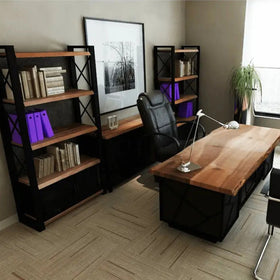
Industrial
Consider:
- Solid wood shelves
- Dark metal frames
- Open construction
- Visible hardware
- Rustic wood texture
Farmhouse and Rustic
Look for:
- Solid pine
- Visible grain and knots
- Warm natural finishes
- Substantial shelf proportions
- A relaxed, handcrafted character
Japandi and Scandinavian
Choose:
- Simple geometry
- Natural wood tones
- Clean construction
- Light visual weight
- Minimal decorative detail
Contemporary and Minimalist
Look for:
- Straight lines
- Smooth surfaces
- Balanced negative space
- Simple materials
- Uncluttered shelf layouts
The bookcase does not need to match every other piece exactly. A shared wood tone, finish, leg style, or overall visual character can be enough to connect it with the room.

Choose the Right Bookcase for a Home Office
In a home office, storage should improve the working environment rather than simply fill the wall.
Frequently used reference books, files, and supplies should remain within easy reach. Decorative objects can be placed higher, while heavier books and storage boxes are usually better positioned on lower shelves.
Compact or vertical units often work well because they preserve floor space and reduce visual clutter around the desk.
A bookcase visible during video calls can also contribute to a more organized and professional background.
For office use, prioritize:
- Easy access
- Suitable shelf depth
- Strong load support
- Space for files and binders
- Cable organization
- A clean, structured appearance
Examine the Finish
A protective finish helps wood resist moisture, stains, minor scratches, and everyday wear.
Matte and low-sheen finishes are often preferred for solid wood because they protect the surface without hiding the natural grain beneath a highly glossy coating.
Before purchasing, check:
- Whether the wood is sealed
- Whether the finish is water resistant
- How the surface should be cleaned
- Whether harsh chemicals should be avoided
- Whether the finish can be refreshed later
No furniture finish makes wood completely waterproof. Spills should still be wiped up promptly, and wet objects should not remain on the shelves.
Check Assembly and Delivery Requirements
Some solid wood bookcases arrive partially disassembled to make transportation safer and reduce the risk of damage.
Before ordering, confirm:
- Which parts require assembly
- Whether instructions are included
- Whether hardware is provided
- The weight of the packaged furniture
- Whether two people are needed for assembly
- Whether the item can pass through entrances and staircases
A heavier solid wood piece may require more care during delivery, but it can also offer greater stability and long-term value.
Do Not Overlook Safety
Tall furniture should normally be secured to the wall with suitable anti-tip hardware.
This is particularly important in homes with:
- Young children
- Pets
- Uneven floors
- High-traffic areas
- Heavy objects stored on upper shelves
Heavier books and objects should generally be placed on lower shelves to improve stability.
Once assembled, the bookcase should sit evenly on the floor without rocking. Adjustable feet may help when the floor is slightly uneven.
Natural Wood Variation Is Normal
Solid wood furniture will not look completely identical from one piece to another.
Grain direction, knots, color variations, and natural markings are part of the material rather than manufacturing defects.
These differences give handcrafted furniture its individual character.
Product photographs should therefore be viewed as a representation of the overall design, wood species, and finish rather than a promise that every grain pattern will look exactly the same.
A Quick Bookcase Buying Checklist
Before making a final decision, ask:
- Does it fit the available width, height, and depth?
- Will it interfere with doors, windows, or outlets?
- Is the shelf depth suitable for my books and objects?
- Can the shelves support the required weight?
- Are long shelves properly reinforced?
- Do I need adjustable shelves?
- Would cabinets or drawers help control clutter?
- Does the style work with the rest of the room?
- Is the finish suitable for daily use?
- Can the furniture be delivered into the room?
- Does it include suitable anti-tip hardware?
- Is the construction appropriate for long-term use?
If a bookcase fails on room fit, shelf strength, or storage function, appearance alone is not enough reason to choose it.
Frequently Asked Questions About Bookcases
What is the best wood for a bookcase?
Oak, walnut, beech, and pine can all work well. Oak and beech offer excellent strength, walnut provides durability with a refined appearance, and pine offers warmth and value when the shelves are properly supported.
Is solid wood worth it for a bookcase?
Solid wood is often worth the investment when the furniture will hold heavy books or remain in use for many years. It also offers natural character and can often be repaired or refinished.
How deep should a bookcase be?
The ideal depth depends on what you plan to store. Standard books fit on relatively shallow shelves, while art books, binders, records, and baskets require more depth.
Are adjustable shelves better?
Adjustable shelves provide more flexibility for objects of different heights. Fixed shelves may contribute more directly to structural stability, depending on the construction.
How can I prevent shelves from sagging?
Choose shelves with suitable thickness and shorter unsupported spans. Central supports, reinforced backs, solid joinery, and even weight distribution can also reduce sagging.
Is pine strong enough for a bookcase?
Yes, solid pine can be suitable for bookcases when the shelves are properly designed. Shelf thickness, width, and support placement are as important as the wood species.
Should a bookcase have a back panel?
A back panel can improve stability and prevent objects from falling behind the furniture. Open-back designs feel lighter and work well as room dividers.
Are tall bookcases safe?
Tall bookcases can be safe when they are assembled correctly and secured to the wall with appropriate anti-tip hardware.
What type of bookcase is best for a small room?
Tall, narrow, corner, or ladder-style bookcases usually work well in compact rooms because they use vertical space while preserving floor area.
Should heavy books go on the bottom shelf?
Placing heavier books and objects on lower shelves can improve stability and reduce the risk of tipping.
Final Thoughts
The right bookcase should fit the room, support the required weight, and provide the type of storage you genuinely need.
Material is important, but it is only one part of the decision. Shelf thickness, width, support spacing, depth, joinery, finish, stability, and placement all affect how well the furniture performs over time.
A tall, narrow design may be ideal for a compact office. A wide bookcase can anchor a larger living room. A corner model can make use of an overlooked area, while a combination of open shelves and cabinets can provide both display space and concealed storage.
The goal is not simply to find a bookcase that looks attractive online. It is to choose one that feels balanced in the room, keeps daily life organized, and remains useful for years.
Tomruque creates handcrafted solid wood bookcases in a range of materials, sizes, and styles for living rooms, offices, bedrooms, and open interior spaces.
Explore the collection:
https://tomruque.com/collections/wood-bookcases
Stay in touch
Instagram: @tomruque
Pinterest: Tomruque
Facebook: Tomruque
YouTube: Tomruque
For custom furniture, size requests, material questions, or collaboration inquiries:
Email: info@tomruque.com
New Collection


from Original price $660.00
from Original price $660.00
Original price
$660.00
from $550.00
from $550.00
Current price
$550.00
Soren Round Solid Walnut Wood Coffee Table | Sculptural Scandinavian Modern Design
In stock
Soren Round Solid Walnut Coffee Table – Sculptural Scandinavian Modern Design A Sculptural Walnut Coffee Table with Soft Architectural Curves The...
View full details

from Original price $748.75
from Original price $748.75
Original price
$748.75
from $699.00
from $699.00
Current price
$699.00
Arden Oval Solid Oak Wood Coffee Table | Sculptural Arched Modern Design
In stock
Arden Solid Oak Oval Coffee Table – Sculptural Arched Modern Design A Sculptural Oak Coffee Table with Soft Organic Curves The Arden Soli...
View full details

from Original price $873.99
from Original price $873.99
Original price
$873.99
from $799.00
from $799.00
Current price
$799.00
Soren Oval Walnut Coffee Table | Sculptural Scandinavian Modern Design
In stock
Soren Oval Solid Walnut Coffee Table – Sculptural Scandinavian Modern Design A Sculptural Walnut Coffee Table with Soft Oval Proportions ...
View full details

from Original price $687.99
from Original price $687.99
Original price
$687.99
from $550.00
from $550.00
Current price
$550.00
Soren Round Oak Coffee Table | Sculptural Scandinavian Modern Design
In stock
Soren Round Solid Oak Coffee Table – Sculptural Scandinavian Modern Design A Sculptural Oak Coffee Table with Soft Architectural Curves The Soren...
View full details

from Original price $1,550.00
from Original price $1,550.00
Original price
$1,550.00
from $1,240.00
from $1,240.00
Current price
$1,240.00
Avero Round Walnut Dining Table | Sculptural Pedestal Design
In stock
Avero Round Solid Walnut Dining Table – Sculptural Pedestal Modern Design A Sculptural Walnut Dining Table with a Distinctive Central Pedestal Th...
View full details